
Voice over work is big in 2025, and it’s not slowing down. Demand jumped 52% for brand marketing and 45% for animation projects. Digital ads grew 35% too, thanks to remote work and the fact that 61% of businesses still prefer human voices over AI.
Here’s the tough part. The wrong mic can hurt your chances before you even finish your first demo. Echo and background noise can ruin an audition fast, especially in home studios. Around 53% of voice actors plan to upgrade their gear this year, and we get why. Your mic matters more than most people think.
We tested microphones in real voice over setups, from bedroom closets to treated booths. In this guide, we rank top picks like the Neumann U 87 Ai for pro studios and the Audio-Technica AT2020 for tight budgets. We’ll show you what to look for, whether a dynamic or condenser mic fits your space, and if USB or XLR makes sense for how you record.
At the end of the day, the best microphones for voice over depend on your room, your voice, and your goals. Some mics are better for commercials, while others fit streaming or podcasts. The key is matching the right tool to what you actually need. We’ll also walk through the must-have accessories that complete your recording chain and help you sound your best on every take.
If you want to see the recording equipment I personally use, you can check out my home studio gear list, where I break down the microphones, interfaces, and accessories I rely on for voice and music work.
Quick List of the Best Voice Over Microphones
- Neumann U 87 Ai – Best Overall Studio Mic for Voice Over
- Sennheiser MKH 416 – Best Shotgun Mic for Voice Over
- Neumann TLM 102 – Best Neumann Mic for Voice Over
- AKG C414 XLII – Best Versatile Multi-Pattern Mic for Voice Over
- Shure SM7B – Best Dynamic Mic for Home Voice Over Studios
- Electro-Voice RE20 – Best Broadcast Dynamic Mic for Voice Over
- Rode NT1 5th Generation – Best Hybrid USB/XLR Condenser Mic for Voice Over
- Shure MV7+ – Best USB/XLR Podcast & Voice Over Mic
- Rode NT1-A – Best Budget Condenser Mic for Voice Over
- Rode PodMic – Best Budget Dynamic Mic for Voice Over
- Logitech Blue Yeti – Best Entry Level USB Mic for Voice Over
- Audio-Technica AT2020 – Best Entry Level XLR Mic for Voice Over
How to Choose the Best Mic for Voice Over
Choosing the right mic comes down to three things: your voice, your room, and your budget. When those line up, getting clean voice recordings becomes a lot easier.
Budget Considerations
Mic prices usually fall into three simple groups. Each level gives you something different.
Under $100
These are starter USB or XLR mics. They’re great for learning and getting comfortable recording at home.
$200 to $400
This is the sweet spot for most people. You get solid sound quality and close to 90% of what high-end mics offer.
$600 and up
This is pro-level gear with top clarity and strong build quality. These mics shine in well-treated spaces.
We’ve found that mid-range mics often deliver most of what expensive mics do. The jump from a few hundred dollars to a few thousand is real, but it’s smaller than many people expect.
Also think about your full setup cost. XLR mics need an interface, which usually adds another chunk to your budget. That’s something to plan for early.
One thing we always stress is this. Room treatment matters more than mic price. A well-treated space with a mid-range mic will beat an expensive mic in a bad room every time.
Voice Type and Tonal Match
Not every mic sounds good on every voice. Some mics make thin or sharp voices worse, while others add warmth and balance.
Dynamic mics work well if your voice leans thin or harsh. They smooth out the top end and help control sharp sounds. Condenser mics capture more detail and work best if your voice already sounds full and rich.
We suggest testing mics with the same demo lines. Read the same phrase each time and compare how your voice comes through. Many brands also post sample recordings so you can hear how their mics handle different voice types.
Pay attention to the low end and how the mic handles s sounds. Your voice should still sound like you, just cleaner and more controlled.
Recording Space and Environment
Your room affects your mic choice just as much as your voice does.
In untreated rooms, dynamic microphones usually work better. Models like the Shure SM7B, Rode PodMic, and Sennheiser MKH 416 do a good job rejecting echo and background noise. They pick up less sound from behind and around you.
In treated spaces, condenser mics really shine. Options like the Rode NT1, AKG C414, or Neumann U87 capture more detail and give you that crisp, polished sound. They need quiet rooms to sound their best.
Start simple. Keep your mic away from walls and hard surfaces. Add blankets or foam panels where you can. Even basic treatment makes a noticeable difference.
Related: How to Soundproof a Home Recording Studio
Intended Use and Workflow
What you plan to record should guide your mic choice.
For detailed work like ads or audiobooks, high-detail condenser mics capture every word clearly. That level of clarity matters when people listen closely.
For podcasting and streaming, dynamics work well because they reject noise. You don’t need every breath or keyboard click during long sessions.
If you create different types of content, hybrid mics with both USB and XLR can be a smart move. The Rode NT1 5th Gen and Shure MV7+ let you plug straight into a computer now and switch to a pro setup later.
USB mics are easy and fast to use. XLR mics give you more control and better sound over time. We usually lean toward XLR if you plan to grow your setup.
Testing with Your Own Voice
Specs and reviews only tell part of the story. You need to hear how a mic sounds with your voice in your space.
Use return policies to test mics at home when possible. Some shops also offer short rentals. Borrowing from friends who already have gear helps too.
Record the same script with each mic and compare the takes side by side using free tools like Audacity. Listen for which mic makes your voice sound the way you want it to.
Trust your ears more than price tags or brand names.
Brand Reliability and Warranty
Stick with brands that have proven track records. Names like Neumann, Shure, Sennheiser, and Rode build mics that last and hold their value.
Good brands also back their gear with solid warranties and support. Look for coverage that protects against defects and issues for several years.
We trust these companies because they’ve been doing this for decades. They use better parts and test their gear before it ships. A good mic should work just as well years from now as it does on day one.
Best Microphones for Voice Over
We put together this list of top microphones for voice over work based on real sessions, not hype. Each pick delivers solid sound so you can record clear and professional voice tracks with confidence.
Neumann U 87 Ai – Best Overall Studio Mic for Voice Over

Pros
- Three polar patterns give you flexibility for different voice setups
- Your voice sounds warm and clear with no harsh edge
- Built solid and made to last for years
Cons
- The price tag will make your wallet cry a bit
- You need a good preamp to make this mic shine
- Heavy weight means you must use a solid boom arm
The Neumann U 87 Ai proved itself right away during a full month of voice over work. From the first take, it was easy to hear why this mic is a studio staple.
Voices come through full and natural. We tested it on deeper voices and higher reads, and both stayed balanced. The low end remains tight, while the top end adds just enough air without sounding sharp.
The three polar patterns make it easy to adapt to different rooms. We used cardioid most of the time, but figure-8 worked well when recording two people. Omni sounded great in treated spaces where we wanted a more open feel.
The low cut switch came in handy when dealing with rumble or close mic work. We rarely used the pad since our preamp had plenty of headroom. All the switches feel firm and well made.
Build quality stands out the moment you pick it up. The metal body and grille feel tough and reliable. The included shock mount works well, though we did wish it held a bit tighter on our boom arm.
One thing to keep in mind is that this mic needs phantom power and a clean preamp. We ran it through an SSL interface and got excellent results. A basic interface may not bring out everything this mic can do.
Yes, the price is steep. But the quality matches it. We see this as a long-term investment for voice over work, and it’s easy to understand why most pro studios keep one close. If you want a deeper breakdown of how it performs in real sessions, check out my full Neumann U 87 Ai microphone review.
Sennheiser MKH 416 – Best Shotgun Mic for Voice Over

Pros
- Captures your voice with clear detail while cutting room noise from the sides
- Solid metal build that feels tough and reliable
- Performs well in challenging spaces like humid rooms or outdoor setups
Cons
- Costs more than most mics you’ll find for home studio work
- Requires phantom power, so you’ll need a compatible interface
- The longer design can be tricky to mount on smaller desk stands
The Sennheiser MKH 416 proved itself over weeks of voice over work, and it nailed every take. Voices come through warm and clear, without that thin sound you hear from cheaper mics.
The shotgun design is what really sets it apart. It locks onto what’s in front of it and pushes background noise to the sides and back. That makes it a strong choice for rooms that aren’t fully treated.
You’ll want to pair it with a solid boom arm or shock mount. In hand, it feels sturdy and well built, not light or fragile. We even took it outside for some field work, and it handled damp conditions without any issues.
One thing we really like is how it behaves up close. Many mics get boomy or muddy when you lean in, but this one stays balanced. You don’t have to wrestle with EQ to make it sound right.
The price can make you stop and think, but there’s a reason pros use this mic on film sets and in top studios. You’re not just buying a microphone. You’re buying gear that working professionals trust every day.
Setup is quick if you have the right cable and interface. Plug it in, turn on phantom power, and you’re ready to record. No extra steps or software to deal with.
Neumann TLM 102 – Best Neumann Mic for Voice Over

Pros
- Delivers warm, clear vocals with a slight presence boost that helps your voice stand out
- Handles loud sources with ease without breaking up
- Solid Neumann build quality in a compact, desk-friendly size
Cons
- Requires phantom power and a decent audio interface
- The fixed cardioid pattern means you can’t switch patterns for different recording needs
- Costs more than entry-level mics, but you’re paying for real Neumann quality
The Neumann TLM 102 impressed us from the first take during voice work. Your voice sits right where it should with very little EQ needed later. That small lift in the upper mids helps vocals cut through without sounding sharp or fake.
In hand, the mic feels solid and well made. The metal body and polished grille look great on a stand, and once it’s in place, it stays put. We also noticed it does a good job avoiding desk bumps and handling noise during sessions.
Recording with this mic feels smooth and easy, especially for voice actors and podcasters. You get a clean, professional sound that makes cheaper mics feel limiting by comparison. The low end stays tight and clear without turning muddy, even on deeper voices.
One thing we really like is how quickly it captures detail. Every word comes through crisp and clear. The built-in pop filter does a decent job, though we still reach for an extra screen on harder P sounds.
For the price, this is a true studio microphone that can serve you well for years. We’ve used ours on plenty of voice over sessions, and it’s never let us down. Clients notice the difference right away.
The main downside is the lack of pattern options since it’s cardioid only. That said, for most voice work, that’s all you need. We do wish it came with a shock mount instead of just the basic stand adapter. If you want to compare it with other studio favorites, take a look at this guide to the best Neumann microphones for recording and voice work.
AKG C414 XLII – Best Versatile Multi-Pattern Mic for Voice Over

Pros
- Nine polar patterns let you fine-tune the sound for almost any room
- Very low noise floor keeps recordings clean and free from hiss
- Solid build with peak LEDs that warn you before clipping becomes a problem
Cons
- The price puts it out of reach for folks just starting out
- You’ll need time to learn which pattern works best
- The size and weight require a sturdy stand or boom arm
The AKG C414 XLII is a mic we reach for when detail really matters. From the first playback, the clarity stands out, and your voice sounds polished and professional.
The nine polar patterns give you a lot of control, though they do take some testing. Once we found the sweet spot, the recordings had a true studio feel. For most voice over work, we stuck with cardioid since it keeps the voice focused and cuts room noise.
The bass cut filters are a big win. They clean up that boomy low end when you work close to the mic with a quick switch. The peak hold LED is also useful, flashing when levels get too hot and helping save clean takes.
This mic has some weight, so a sturdy stand is important. Once mounted, it feels secure, and the shock mount does a great job blocking vibrations and floor noise.
For voice over artists chasing top-level sound, this mic delivers. Pair it with a good preamp and it really comes alive, and features like lock mode help keep settings from changing mid-session.
Related: Top 8 Best AKG Microphones
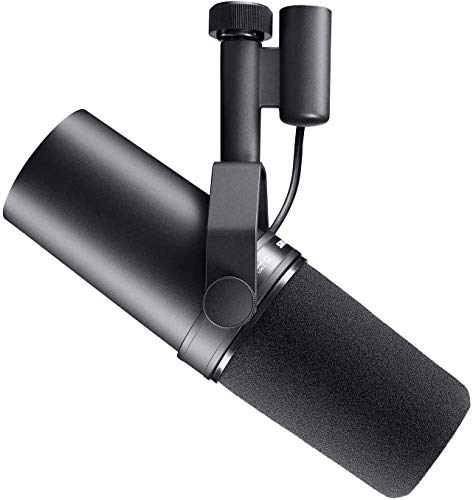
Shure SM7B – Best Dynamic Mic for Home Voice Over Studios
Pros
- Cuts out room noise like a champ even in less than ideal spaces
- Solid build that holds up to years of heavy use
- Gives you warm and clear sound that works for vocals and instruments
Cons
- Needs a lot of gain, so a strong preamp or interface is a must
- Costs more than many mics made for home setups
- Takes some tweaking to dial in the tone using the built-in switches
The Shure SM7B really comes alive once you give it enough gain. When it’s powered properly, your voice sounds warm and full without any thin or harsh edge. We used it for voice over work and vocal takes, and everything came out clean and polished.
The build feels solid and dependable. This mic can take a few bumps and keep working, and we like that it includes a foam windscreen and a metal plate that covers the switches so your settings stay put.
The biggest thing to know is that it needs a lot of gain. You can’t just plug it into any interface and expect great results. We had to add a preamp to push the signal properly, which adds to the overall cost but makes a big difference in sound.
The onboard switches are handy for quick tone shaping. Rolling off low end or boosting mids helped us deal with low hum without touching software. The tight pickup pattern also does a great job rejecting background noise. Even near a loud computer fan, the mic stayed focused on our voice.
For voice over work, the SM7B shines. Speech comes through clear and easy to listen to, and it even performed well on guitar amps. It costs more than a basic USB mic, but the jump in sound quality is obvious. You hear it in every take.
If you want a closer look at how it performs in real sessions, check out this full Shure SM7B microphone review.
And if you’re comparing options, take a look at these top Shure SM7B alternatives to see how other mics stack up.
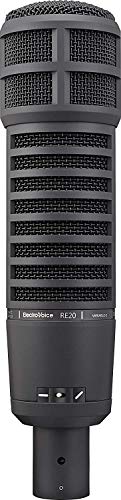
Electro-Voice RE20 – Best Broadcast Dynamic Mic for Voice Over
Pros
- Handles close-up voice work without making you sound boomy
- Solid build that feels sturdy in your hand or on a stand
- Smooth, warm tone that sounds professional right away
Cons
- Needs a strong preamp since it requires a lot of gain
- Priced higher than many mics in this range
- Heavy design means you’ll need a solid boom arm or stand
The Electro-Voice RE20 impressed us after a week of voice over sessions. It hits a great balance where your voice sounds rich but still clear. Even when you lean in close, it avoids that exaggerated low end that can create extra work later.
In hand, the mic feels tough and well made. The metal body gives you confidence that it can handle daily use. We even knocked it over once, and it kept working without any issues.
Voices come through warm and full without sounding muddy. The built-in pop filter does a solid job, so you can record without an extra screen if you want. We still like using one just to be safe, but it’s less necessary here than with many other mics.
The main thing to plan for is gain. This mic wants a lot of it to reach healthy levels. With a basic interface, we had to push the gain pretty hard, which added some noise. Adding a gain booster or a better preamp fixes that fast.
For the price, you’re getting a serious professional tool that can last for years. Broadcasters have relied on this mic for decades, and it still holds up today.
Final mixes sound clean and polished with very little effort. We like how little EQ work is needed. The tone sits naturally in the mix and stays out of the way.
Rode NT1 5th Generation – Best Hybrid USB/XLR Condenser Mic for Voice Over

Pros
- Dual output lets you use both XLR and USB with one mic
- Sound stays warm and clear with almost no background hiss
- Solid build that feels ready for years of daily use
Cons
- USB mode needs more gain adjustment than expected
- The pop filter mount can feel loose over time
- Costs more than basic entry-level mics
The Rode NT1 5th Gen handled weeks of voice over work without any issues. The tone stands out right away, keeping voices smooth and natural without harsh edges.
Build quality feels solid, with a metal body that has a nice weight and a clean finish that looks good in any setup.
You get clean results whether you use USB or XLR. We tested both, and the dual connection makes it easy to start simple and upgrade later without buying another mic.
Background noise stays low, which means less cleanup after recording. USB mode does need a bit more gain than XLR, but it’s easy to work around.
The shock mount works fine, though it feels lighter than the mic itself. On the plus side, the mic handles loud vocals well and stays clean even when you get close.
For voice over work, this mic hits a great balance between price and performance. Setup is fast, everything comes in the box, and most clients would never guess it’s a budget-friendly option.
If you want to compare it with other options in the same lineup, check out this guide to the best Rode mics for voice over and recording.
Related: Shure SM7B vs. Rode NT1: Which Mic is Best for You?
Shure MV7+ – Best USB/XLR Podcast & Voice Over Mic

Pros
- LED touch panel with tap to mute works great on camera and looks clean on video
- Auto Level Mode keeps your volume steady when you move closer or farther from the mic
- USB-C and XLR connections give you flexibility as your setup grows
Cons
- The price sits higher than most mics aimed at people just starting out
- You need the app to unlock the full range of what this mic can do
- The built-in reverb can sound a bit much if you don’t dial it back
The Shure MV7+ impressed us right away during voice over sessions. You plug it in, start talking, and it works without any hassle.
The touch panel is genuinely useful. One tap mutes the mic, and the LED ring shows your levels in real time. During Zoom calls or live sessions, that saves you from hunting for controls on your screen.
Auto Level Mode does what it claims. We moved from close mic work to about a foot back, and the gain adjusted smoothly. Our voice stayed clear and even the whole time. The real-time noise reduction also held up well. We ran a fan in the room, and the mic kept our voice clean without sounding processed.
Having both USB-C and XLR connections is a big win. You can start with just a laptop and move to an interface or mixer later without replacing the mic. That flexibility makes it easy to grow your setup.
Build quality feels solid, with a metal body that handled regular use with no issues. The MOTIV Mix app lets you fine-tune EQ, noise reduction, and levels, and saving presets only takes a few minutes. You do need the app for full control, but once set, every session sounds consistent.
For voice over work where you need clean sound fast, the MV7+ delivers professional results without the steep learning curve of higher-end studio mics.
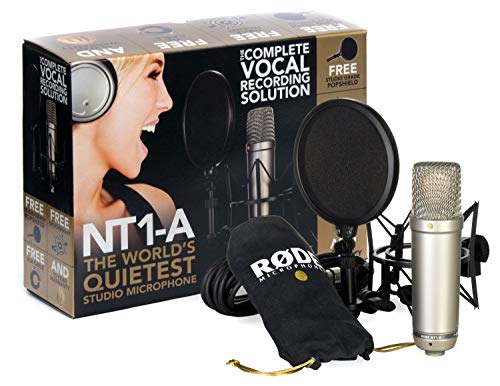
Rode NT1-A – Best Budget Condenser Mic for Voice Over
Pros
- Near-silent self-noise lets you record voice work without any hiss or buzz
- Comes with a shock mount and pop filter in the box
- Clear vocal sound that competes with mics that cost much more
Cons
- Requires an audio interface with phantom power
- The shock mount feels lighter than the mic itself
- Single pickup pattern means less flexibility
The Rode NT1-A impressed us right away on voice over projects. From the first take, the clarity stands out, with warm, detailed vocals that avoid the thin or brittle sound cheaper mics can have.
It stays impressively quiet while recording. Even with the gain pushed, the noise floor was barely noticeable, which makes editing much easier.
Setup is quick once you have an interface. Mount the mic, connect the XLR cable, turn on phantom power, and you’re ready to record in minutes.
Build quality feels solid. The metal body holds up well to regular use, and after months of sessions, it still looks great.
For voice over work, the sound feels polished right out of the box. Lows stay full, highs stay clean, and harsh tones never take over. We also like that Rode includes both a shock mount and pop filter, which saves extra purchases.
The cardioid pattern works well for solo voice recording and helps keep room noise under control. If you want a deeper look at how it performs in real sessions, check out this in-depth Rode NT1-A microphone review.
Rode PodMic – Best Budget Dynamic Mic for Voice Over

Pros
- Solid metal build that feels tough and ready for daily studio use
- Built-in pop filter keeps plosives under control without extra gear
- Dynamic design helps keep room noise out of your recordings
Cons
- You need a decent preamp or interface that can push strong gain to drive it
- You may hear a bit of hiss if your interface struggles to deliver enough power
The Rode PodMic surprised us in the best way during voice over sessions. It delivers a warm, full sound right away, and the weight alone tells you it’s built to last.
Your voice comes through with a strong low end that adds depth without getting muddy. The built-in pop filter handles most P and B sounds well, though we still use an external filter on some reads.
This mic needs real gain to sound its best. Basic USB setups won’t work here. We paired it with a Scarlett interface and pushed the gain to around seventy five percent, which gave us a clean, usable signal with minimal noise. Since it’s XLR only, an interface is part of the deal.
Room noise stays under control, making it a solid choice for home studios. You can work close to the mic and still get clear takes, and the internal shock mount helps reduce desk bumps during long sessions.
For the price, the PodMic holds its own against mics that cost much more. Most voice over clients would never know you weren’t using higher-end gear.
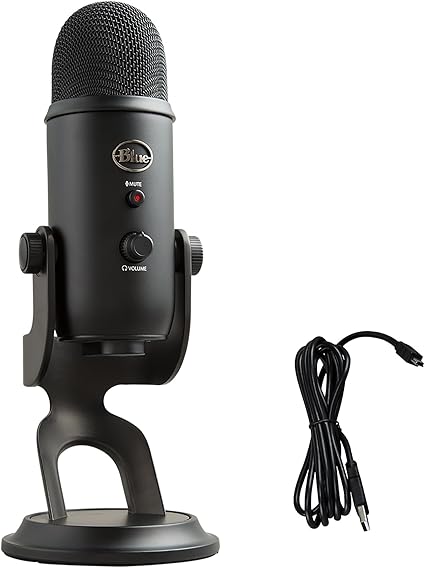
Logitech Blue Yeti – Best Entry Level USB Mic for Voice Over
Pros
- Four pickup modes make it easy to switch between solo recording and group setups
- Front-facing controls keep mute and gain right within reach while you record
- Works instantly when you plug it into a USB port
Cons
- The mic picks up desk bumps and room noise more than we hoped
- You need to stay fairly close to the mic for the best sound
- The weight can cause lighter boom arms to sag or tip
The Logitech Blue Yeti gave us clean voice recordings right from the start. Setup is quick. Plug it in and you’re recording in under a minute with no extra gear.
The pickup modes actually make a difference. We used cardioid for most voice over work and got clear, focused sound. Omni and bidirectional modes worked well for group chats and two-person setups.
Controls are easy to reach, with gain and mute right on the mic. The sound is solid for a USB mic, with a warm midrange that suits spoken audio well.
You’ll get the best results staying fairly close to the mic. Room echo can creep in if your space isn’t treated, and the mic’s weight means a sturdy boom arm helps.
For the price, it’s a simple way to start voice over work without dealing with complex setups.
If you want to compare it with another Blue option, check out this Bluebird SL microphone review. And since plosives can be an issue, this guide to the best pop filters for the Blue Yeti is also worth a look.
Audio-Technica AT2020 – Best Entry Level XLR Mic for Voice Over

Pros
- Clear and detailed vocal sound with a warm tone that competes with pricier mics
- Solid metal build that can handle daily use and a few bumps
- Cardioid pattern helps keep side noise out of your recordings
Cons
- Requires an audio interface with phantom power
- Takes up more desk space than USB mics due to its design
- Very sensitive, so it picks up mouth sounds and breathing
The Audio-Technica AT2020 impressed us right away in our home studio. From the first session, it delivered a clean, warm sound that feels more expensive than its price.
For voice over work, recordings come through clear and natural, without the brittle edge you hear on cheaper mics. The detail is strong, and tracks sit well without much processing.
Build quality is solid. The all-metal body feels tough, and we didn’t feel the need to baby it. A few bumps didn’t slow it down at all.
The cardioid pattern stays focused on your voice and helps reduce side noise, though some basic room treatment still helps. Since it’s an XLR mic, you’ll need an interface with phantom power, which adds to the setup cost.
It is sensitive, so it picks up breaths and mouth noise. That means a bit more editing, but you also get plenty of detail to work with.
For voice over artists on a budget, this mic strikes a great balance. It sounds professional enough for paid work and is built to last for years.
Dynamic vs. Condenser Microphones for Voice Over
Choosing between a dynamic and a condenser mic mostly comes down to your room.
Dynamic mics like the Shure SM7B work well in untreated or noisy spaces. They stay focused on your voice and help keep things like AC noise and room echo out of your recordings.
Condenser mics such as the Rode NT1 capture more detail and give you a cleaner, more polished sound. The tradeoff is they hear everything, so a quieter and better-treated space really helps.
Most people start with a dynamic mic at home since it’s more forgiving. Once your room improves, switching to a condenser can be a smart next step.
Both types work for voice over. Your space and budget matter more than chasing a specific mic style.
USB vs. XLR Microphones
When choosing a voice over mic, it usually comes down to USB or XLR.
USB mics plug straight into your computer and are easy to use. They’re great if you’re just starting out, since you don’t need extra gear to get going. They’re also portable and cost less up front, while still offering solid sound for the price.
XLR mics take a bit more setup. You’ll need an audio interface or mixer, but in return you get better sound quality and more control. This setup gives you room to grow as you upgrade your gear. That’s why pro studios stick with XLR.
Some mics, like the Audio-Technica AT2020, come in both USB and XLR versions. That makes it a smart starting point if you plan to upgrade later.
If you’re easing into voice over work, starting with a USB mic such as the Blue Yeti makes sense. Once you’re ready, moving to an XLR mic and interface can noticeably improve your sound.
Most people don’t need XLR right away. USB mics let you start recording today without spending extra on gear you may not need yet.
Essential Accessories for Voice Over Recording
A good mic is only part of the setup. A few simple accessories can make a big difference in how clean your recordings sound.
A pop filter helps control hard P and B sounds so they don’t ruin a take. A shock mount keeps vibrations from desk bumps and movement out of your audio. A boom arm makes it easier to place the mic where it sounds best and frees up desk space.
You’ll also want an audio interface or preamp, especially for dynamic mics like the Shure SM7B, which need extra gain. Closed-back headphones help you monitor without sound bleeding into the mic, and a bit of room treatment can reduce echo and tighten up your sound.
You don’t need to buy everything at once. Start with the basics, then add pieces as your setup and budget grow.
Final Thoughts: What is the Best Microphone for Recording Voice Overs?
There’s no single mic that works for everyone. Your voice, your room, and your budget all matter more than chasing one perfect model.
From our experience, the Neumann U 87 Ai is the top pick for high-end studio work. It sets the standard for voice over and delivers the kind of sound pro studios expect.
For most home setups, we usually recommend the Shure SM7B. It handles room noise well and gives you a warm, clear tone, even if your space isn’t fully treated.
If you’re watching your budget, the Rode PodMic is a solid choice. It delivers strong results at a much lower price while still keeping that dynamic mic sound.
One last tip. Try mics before you buy when possible. Also budget for good cables, a sturdy stand, and some basic room treatment. Even the best mic won’t sound great if your space works against you.
If you’re also planning to record singing or spoken vocals beyond voice over work, this guide to vocal microphones for recording is worth a look to help you choose the right mic for studio vocals.
Frequently Asked Questions
Which mic should I buy if I’m just starting in voice over?
Start with a USB microphone for the easiest setup. USB mics plug straight into your computer and work well for auditions and learning without extra gear.
If you plan to upgrade later, an XLR mic with a basic interface gives you more flexibility once your setup grows.
What type of mic is best for voice over?
The best mic depends on your room. Condenser mics are the standard for voice over because they capture detail and warmth.
In noisy or untreated spaces, dynamic mics work better. Shotgun mics are also used in commercial and film work since they focus tightly on the voice and reject side noise.
What features matter most in a voice over microphone?
Low self-noise, a natural tone, and good noise rejection matter most.
You should also choose between USB for simplicity or XLR for long-term flexibility, and stick with reliable brands built for daily use.
Are USB microphones good enough for professional voice over?
Yes, USB mics are good enough for auditions, e-learning, podcasts, and many paid jobs when used in a treated space.
They are not ideal for high-end broadcast work, though hybrid USB/XLR mics help bridge that gap.
What accessories do I really need for voice over work?
At minimum, you need a pop filter, mic stand or boom arm, and closed-back headphones.
If you use an XLR mic, add an audio interface, and prioritize basic room treatment, which improves sound more than most mic upgrades.
What microphones do professional voice actors use?
Professional studios use high-end mics like the Neumann U 87 and Sennheiser MKH 416.
Many working voice actors record at home with mid-range mics. Matching the mic to your voice and room matters more than using the most expensive model.